Cold plunging can boost metabolism, inflammation control, energy, and mood, but for women — especially those with hormone imbalance, perimenopause changes, high stress, histamine issues, or thyroid slowdowns — cold exposure must be done properly.
The wrong protocol can spike cortisol.
The right protocol can support thyroid, mitochondria, and metabolic flexibility.
Let’s break down the hormone-safe way to cold plunge.

⭐ How Cold Plunging Affects Women’s Hormones
1. Boosts Mitochondria → Faster Metabolism
Cold activation increases mitochondrial energy output.
📎 Read More: NAD+ Boosters & Metabolic Energy Decline
Buy on Amazon2. Reduces Inflammation (Huge Benefit for Endo & Histamine Cases)
Cold lowers mast-cell activation and histamine release.
📎 Read More: MCAS Triggers in High-Stress Women
3. Supports Thyroid Hormone Activation
Short, controlled cold exposure helps T3 uptake and brown-fat activation.
📎 Read More: Metabolic Hypothyroidism
4. Improves Mood & Stress Tolerance
Cold boosts dopamine and calms cortisol if done correctly.
But…
If done too long or too cold → cortisol spikes
especially in women with:
- PMS
- Perimenopause
- High stress
- Low thyroid
- Histamine issues
⭐ Hormone-Safe Cold Plunge Protocol for Women
✔ Step 1: Start With 15–30 Seconds
Not 2–3 minutes.
Not viral TikTok extremes.
Women’s nervous systems respond FAST → start small.
Buy on Amazon✔ Step 2: Water Temperature 55–60°F (13–16°C)
Below 50°F can cause stress hormone spikes.
✔ Step 3: Breathe Slowly
- No gasping
- No breath-holding
- Aim for slow nasal breathing
If your breathing stays calm → hormones stay calm.

✔ Step 4: Total Time Goal = 90 Seconds to 2 Minutes
For metabolic benefit, women don’t need long exposure.
✔ Step 5: NEVER Cold Plunge During PMS or Ovulation
These phases are:
- High cortisol sensitivity
- Low stress resilience
- More histamine reactivity
Cold → bigger hormone swings.
📎 Read More: The Estrogen–Histamine Loop
Buy on Amazon✔ Step 6: Best Time of Day: Morning
Cold in evening can:
- Increase cortisol
- Reduce sleep quality
Cold in morning:
- Boosts dopamine
- Boosts metabolism
- Increases resilience
✔ Step 7: Eat Something Small First (If Low Cortisol Woman)
Women with:
- Fatigue
- Lightheadedness
- Low blood pressure
- Perimenopause
…should not plunge on an empty stomach.
Half banana, apple, or electrolyte water is enough.
⭐ Who Should Avoid Cold Plunging?
- Severe hypothyroid unmanaged
- Raynaud’s syndrome
- Histamine spikes after cold
- Chronic burnout / adrenal fatigue
- Pregnancy
- Severe anxiety episodes
If cold triggers itching, flushing, dizziness → STOP.
📎 Read More: DAO Deficiency & Histamine Anxiety
⭐ Benefits Women Can Expect (When Done Right)
After 1–3 sessions
- Better mood
- More alertness
- Reduced inflammation
- Clearer thinking
After 7–14 days
- Better stress handling
- Less bloating
- Better morning energy
After 4–6 weeks
- Improved metabolism
- More toned midsection (brown fat activation)
- Lower inflammation markers
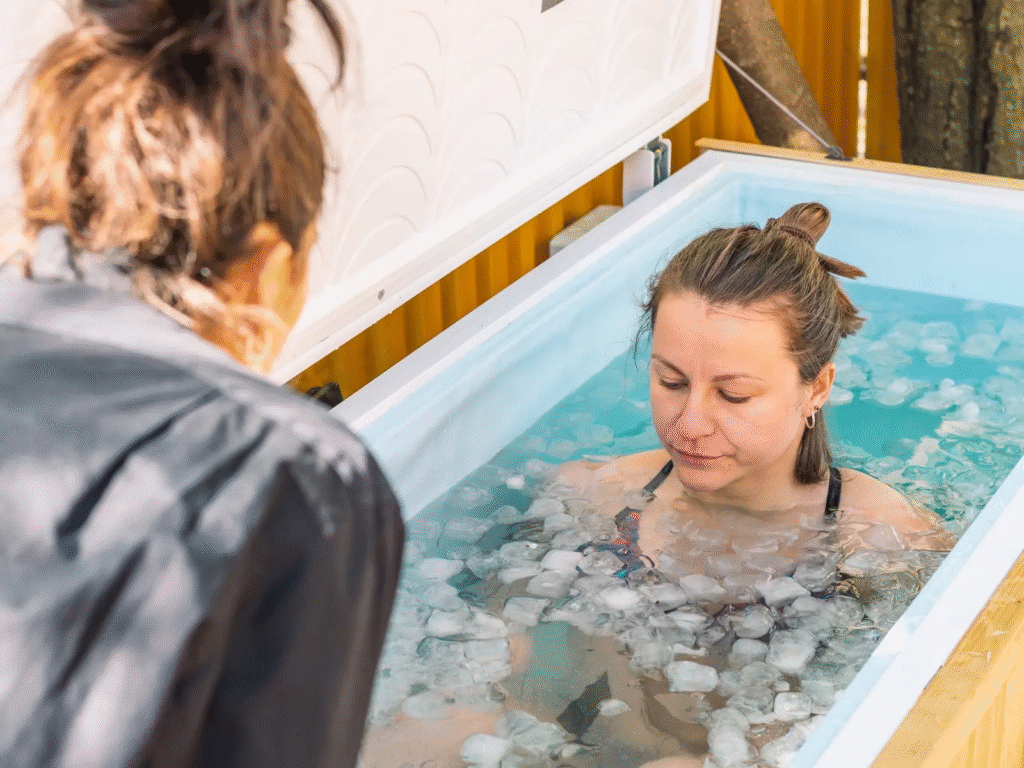
⭐ Quick Hormone-Safe Cold Plunge Plan (Summary)
- Start: 20–30 seconds
- Goal: 90 seconds – 2 minutes
- Temp: 55–60°F
- When: Morning
- Avoid: PMS + Ovulation
- Key: Calm breathing
- Stop if: You get dizzy, itchy, numb fingers, chest tightness
⭐ Related Articles
📎 Read More: Red Light Therapy for Thyroid & Skin
📎 Read More: NAD+ Boosters & Metabolic Energy Decline
⚠️ Health Disclaimer
This article is for educational purposes only. Consult a licensed practitioner if you have thyroid disorders, circulatory issues, anxiety conditions, or hormone-related medical concerns before starting cold exposure routines.