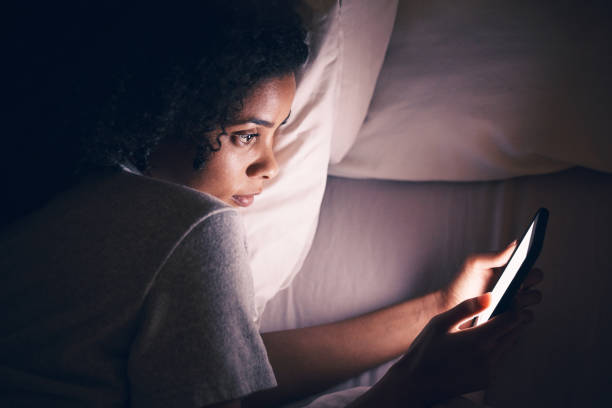
In today’s world, women are surrounded by EMF exposure — from phones, Wi-Fi routers, laptops, smart TVs, Bluetooth earbuds, and wearable devices.
The problem?
EMFs don’t just affect sleep…
They disrupt cortisol, melatonin, and the brain’s circadian clock.
And for women already experiencing perimenopause, thyroid issues, or high stress, EMF exposure can intensify:
- Night waking
- 3 AM cortisol spikes
- Insomnia
- Anxiety
- Belly fat
- Brain fog
Let’s break it down simply.
⭐ What Are EMFs? (Simple Explanation)
Electromagnetic fields (EMFs) come from:
- Phones
- Wi-Fi routers
- Bluetooth devices
- Smartwatches
- Laptops
- Tablets
- Smart home devices
Your brain and hormones are extremely sensitive to them — especially at night.
⭐ How EMFs Disrupt Sleep & Cortisol Rhythm
1. EMFs Suppress Melatonin
Melatonin controls:
- Sleep depth
- Circadian rhythm
- Nighttime cortisol drop
EMF exposure at night → lower melatonin → lighter sleep → hormonal imbalance.
📎 Read More: 3 AM Cortisol Spike
2. EMFs Raise Cortisol at Night
High cortisol at night causes:
- Racing thoughts
- Restless sleep
- Night waking
- Heart pounding at bedtime
This is why many women feel “wired but tired” at night.
3. EMFs Confuse the Circadian Clock
The brain interprets EMF exposure like daylight, which:
- Pushes bedtime later
- Disrupts hormone release
- Causes shallow sleep cycles
📎 Read More: Hot Flash Management Without HRT (sleep section)

4. EMFs Increase Inflammation
Low-grade inflammation worsens:
- Insomnia
- Anxiety
- Blood sugar instability
- Gut irritation
📎 Read More: Gut Health and Belly Fat
5. EMFs Affect Thyroid Function
Thyroid cells are highly sensitive to electromagnetic fields.
Potential effects:
- Slower T3/T4 conversion
- Fatigue
- Weight gain
- Warm–cold sensitivity
📎 Read More: Metabolic Hypothyroidism
⭐ Signs EMF Exposure Is Affecting Your Sleep
- Trouble falling asleep
- Waking between 2–4 AM
- Feeling wired at bedtime
- Head pressure at night
- Tingling or buzzing sensations
- Morning grogginess
- Higher anxiety at night
- Night sweats worsening with screen use
If symptoms improve when away from devices → EMF is part of the problem.
⭐ High-EMF Sources in the Bedroom
- Phone charging next to head
- Wi-Fi router in bedroom
- Smartwatch worn overnight
- Laptop near the bed
- Bluetooth earbuds
- Smart speakers near pillow
- TV left on or plugged in near bed
Even if the device isn’t in use, it still emits EMF.
⭐ How to Reduce EMF Exposure (Practical Steps)
1. Keep Phone in “Airplane Mode” at Night
Best immediate improvement for cortisol + melatonin.
2. Move Wi-Fi Router Away From Bedroom
Ideally 15–20 feet away.

3. Don’t Charge Phone Near Bed
Charge on the opposite side of the room.
4. Stop Wearing Smartwatch Overnight
HRV and sleep tracking seem helpful —
but the EMF cost can be worse.
5. Avoid Late-Night Screen Use
Screens + EMF + blue light → cortisol spike before sleep.
Use:
- Night mode
- Warmer screen colors
- Blue-light blockers if needed
6. Use Ethernet for Laptop if Possible
This eliminates major EMF exposure for work-from-home women.
⭐ How to Fix Cortisol Rhythm After EMF Disruption
1. Morning Sunlight
Resets melatonin cycle → reduces nighttime cortisol.
2. Magnesium Glycinate Before Bed
Calms the nervous system and lowers cortisol.
📎 Read More: Does Magnesium Help You Lose Belly Fat
3. Light Evening Routine
- Warm shower
- Dim lights
- 5–7 minutes breathwork
- No screens last hour
4. Stable Blood Sugar
Prevents cortisol spikes overnight.
📎 Read More: Healthy Foods That Spike Blood Sugar
⭐ Bonus: 3-Foot Rule
Keep all EMF-emitting devices 3 feet away from your body while sleeping.
The radiation drops dramatically with distance.
⚠️ Health Disclaimer
This article is for educational purposes only. Consult a licensed medical professional for persistent insomnia, anxiety, or hormonal issues.