
You’re fine all day — then after 10 PM, things shift.
Sudden itching.
Racing heart.
Anxiety out of nowhere.
Flushing, congestion, or that “wired but tired” feeling.
If this pattern feels familiar, it’s not random.
Nighttime histamine spikes are a real, body-driven phenomenon — and they often show up when stress hormones, sleep timing, and blood sugar collide.
🔎 Key Takeaways (TL;DR)
- Histamine symptoms often worsen at night due to circadian rhythm + cortisol changes
- Low blood sugar and nervous system stress can amplify histamine release
- Calming the nervous system and stabilizing evenings can significantly reduce symptoms
Why Histamine Spikes After 10 PM (Body-First Explanation)
Histamine isn’t just about allergies.
It’s also a neurotransmitter involved in wakefulness, digestion, and stress signaling.
At night, several things happen at once:
- Cortisol should drop
- Melatonin should rise
- The nervous system should shift into “rest mode”
But when this transition is disrupted, histamine stays active instead of quieting down.
This creates symptoms that feel sudden — but are actually timing-related.
📎 Read More: Wired But Tired at Night: Why Your Cortisol Is Spiking
The Cortisol–Histamine Connection
Cortisol and histamine are tightly linked.
When cortisol is unstable at night:
- Mast cells become more reactive
- Histamine release increases
- The body stays in alert mode
This is why histamine symptoms often overlap with:
- Night anxiety
- Early-morning awakenings
- Restless sleep
📎 Read More: Perimenopause Insomnia: Why You Wake Up at 3 AM
Common Nighttime Histamine Symptoms
These symptoms often appear without warning:
- Itching or skin flushing
- Racing or pounding heart
- Nasal congestion when lying down
- Anxiety or agitation
- Sudden heat or chills
Many people mistake this for anxiety — but the sequence starts in the body, not the mind.
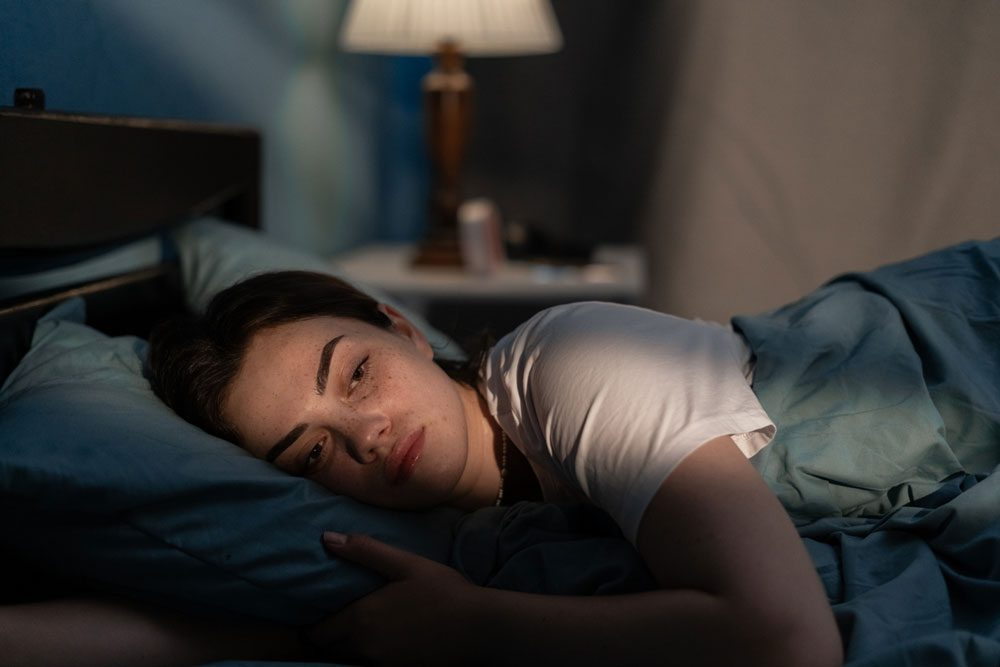
Is This Normal? (Yes — and Here’s Why It Feels So Intense)
Yes. Many people describe nighttime histamine episodes as:
- “My body feels on edge, but my thoughts are calm”
- “Symptoms start exactly when I lie down”
- “I wake up feeling panicky for no reason”
This intensity happens because histamine directly stimulates the nervous system, especially when sleep hormones are supposed to take over.
The Blood Sugar–Histamine Loop
Low blood sugar is a major hidden trigger.
When glucose dips at night:
- The brain senses danger
- Cortisol rises to compensate
- Histamine release increases
This loop explains why symptoms are worse:
- After late sugar or alcohol
- On low-calorie days
- When dinner lacked protein
📎 Read More: Stress Weight Gain (Even With Clean Eating)
What Actually Helps Calm Nighttime Histamine
This isn’t about suppressing symptoms — it’s about restoring regulation.
Helpful strategies include:
- Protein-rich, earlier dinners
- Gentle wind-down routines (not intense workouts)
- Slow breathing with long exhales
- Consistent sleep timing
The goal is to signal safety to the nervous system before histamine takes over.
📎 Read More: Hormonal Belly Fat (Estrogen vs Cortisol)
FAQs
Why does histamine get worse when I lie down?
Lying down changes blood flow and nervous system tone, which can increase histamine sensitivity.
Is this histamine intolerance?
Not always. Many people have timing-based histamine reactions without true intolerance.
Can menopause or perimenopause make this worse?
Yes. Hormonal shifts can amplify histamine and cortisol interactions at night.

What to Focus on First
Don’t chase supplements right away.
Start with:
- Evening stability
- Sleep rhythm
- Nervous system calming
When the body feels safe, histamine naturally quiets down.
Related Reading
📎 Read More: Wired But Tired at Night: Why Your Cortisol Is Spiking
📎 Read More: Perimenopause Insomnia: Why You Wake Up at 3 AM
📎 Read More: Stress Weight Gain (Even With Clean Eating)
📎 Read More: Hormonal Belly Fat (Estrogen vs Cortisol)
Health Disclaimer
This content is for informational purposes only and does not constitute medical advice.
Histamine symptoms can overlap with other conditions. Consult a qualified healthcare professional for diagnosis or treatment.