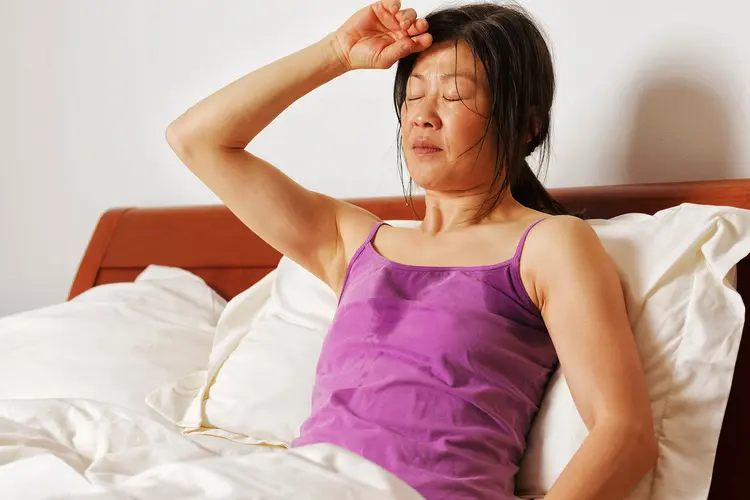
Waking up drenched in sweat at night is one of the most disruptive perimenopause symptoms.
You’re hot.
You throw off the covers.
Then you feel cold.
And falling back asleep feels impossible.
While hormone therapy can help some women, many are looking for relief without HRT — and that is possible.
Night sweats are driven by estrogen fluctuations, cortisol shifts, and unstable body-temperature regulation, not just menopause itself.
Why Night Sweats Happen During Perimenopause
Estrogen helps regulate:
- Body temperature
- Blood vessel dilation
- Sleep stability
As estrogen fluctuates:
- The brain’s thermostat becomes overly sensitive
- Small temperature changes trigger sweating
- Cortisol surges make the response stronger
📎 Read More: Why Perimenopause Feels Like a Second Puberty
The Difference Between Hot Flashes & Night Sweats
Hot flashes:
- Can happen anytime
- Often brief
Night sweats:
- Occur during sleep
- Are more disruptive
- Often linked to cortisol rhythm issues
📎 Read More: Perimenopause Insomnia: Why You Wake Up at 3 AM
📎 Read More: 3 AM Cortisol Spike: Why You Wake Up & Can’t Sleep
5 Cooling Strategies That Actually Work (Without HRT)
1. Lower Your Core Temperature Before Bed
Your body must cool down to stay asleep.
Helpful habits:
- Take a warm (not hot) shower before bed
- Keep the bedroom cool
- Use breathable bedding
This pre-cooling helps prevent nighttime overheating.
2. Stabilize Blood Sugar at Dinner
Blood sugar crashes at night can trigger adrenaline and cortisol, leading to sweating.
Helpful tips:
- Eat balanced dinners (protein + fiber)
- Avoid sugary desserts late
- Limit alcohol at night
📎 Read More: Healthy Foods That Spike Blood Sugar
📎 Read More: Insulin Resistance Belly vs Cortisol vs Thyroid Belly
3. Reduce Evening Cortisol Signals
Stress hormones amplify night sweats.
Simple changes:
- Dim lights after sunset
- Avoid intense workouts late
- Create a calming wind-down routine
📎 Read More: Cortisol Crash in the Afternoon
📎 Read More: Cortisol & Morning Coffee Timing
4. Support Histamine Balance
Histamine can increase body heat and alertness at night — especially when estrogen drops.
Helpful steps:
- Avoid high-histamine foods in the evening
- Notice if night sweats follow certain meals
📎 Read More: The Estrogen–Histamine Loop
📎 Read More: The 7-Day Low-Histamine Reset Plan
5. Improve Sleep Consistency (More Than Duration)
Irregular sleep schedules disrupt temperature regulation.
Focus on:
- Consistent bedtime and wake time
- Morning light exposure
- Limiting late-night screen use
📎 Read More: Wearable Metrics That Reveal Hormone Imbalance
When to Consider Medical Support
Talk to a clinician if:
- Night sweats are severe or worsening
- Sleep is consistently disrupted
- You experience weight loss, fever, or pain
Hormonal night sweats are common — but other conditions should be ruled out.
Related Reading
📎 Read More: Perimenopause Insomnia: Why You Wake Up at 3 AM
📎 Read More: Why Perimenopause Feels Like a Second Puberty
📎 Read More: Cortisol Crash in the Afternoon
📎 Read More: Hormonal Belly Fat (Estrogen vs Cortisol)
Health Disclaimer
This article is for general wellness education only.
For persistent or severe night sweats, consult a licensed healthcare professional.