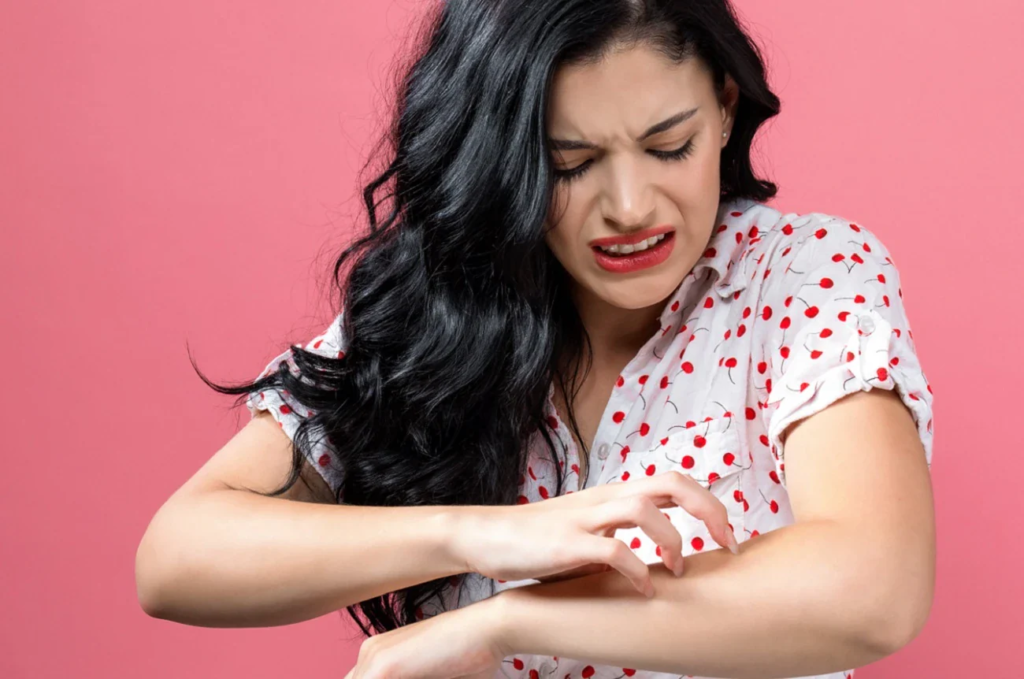
Sudden itchy, dry, or irritated skin is one of the most confusing perimenopause symptoms.
There’s no rash.
No allergy.
No new soap.
Yet your skin feels tight, sensitive, or constantly itchy — especially at night.
This isn’t just “aging skin.”
For many women, skin itch and dryness are direct results of hormonal changes during perimenopause.
Why Perimenopause Affects Your Skin So Strongly
Skin is highly hormone-sensitive.
As estrogen and progesterone fluctuate, several protective systems weaken at the same time.
1. Estrogen Decline Reduces Skin Hydration
Estrogen supports:
- Collagen production
- Natural oil (sebum) levels
- Skin thickness and elasticity
When estrogen drops:
- Skin becomes thinner
- Moisture evaporates faster
- Itching becomes more likely
This dryness can show up anywhere — arms, legs, scalp, face, and even ears.
📎 Read More: Itchy Ears During Perimenopause: Causes & Simple Relief
2. Histamine Sensitivity Increases Skin Reactivity
Estrogen helps regulate histamine activity.
When estrogen fluctuates, histamine becomes more active.
This can cause:
- Generalized itching
- Tingling or crawling sensations
- Burning skin without rash
📎 Read More: The Estrogen–Histamine Loop
📎 Read More: The 7-Day Low-Histamine Reset Plan
3. Cortisol Makes Skin Symptoms Feel Worse
Stress hormones don’t just affect mood — they affect skin.
Elevated cortisol:
- Thins the skin barrier
- Increases inflammation
- Amplifies itch perception
This is why itching often:
- Gets worse at night
- Flares during poor sleep
- Spikes during stressful periods
📎 Read More: Cortisol Symptoms
📎 Read More: Cortisol Crash in the Afternoon
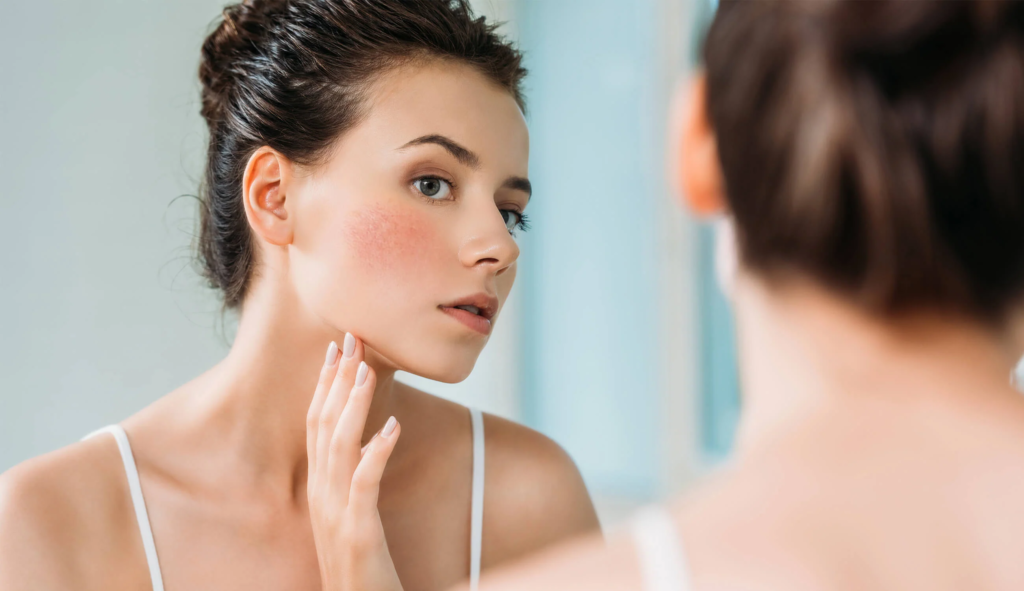
Common Skin Symptoms Women Notice
Perimenopause-related skin changes may include:
- Dry, tight skin after showering
- Itching without visible rash
- Flaky patches
- Burning or tingling sensations
- Sensitivity to products you once tolerated
📎 Read More: Why Perimenopause Feels Like a Second Puberty
Immediate Relief vs Long-Term Fix (What Actually Helps)
Immediate Relief (Today)
These steps often reduce discomfort quickly:
- Apply fragrance-free moisturizer to damp skin
- Avoid hot showers
- Use gentle, non-foaming cleansers
- Wear breathable fabrics
Long-Term Fix (Weeks)
To reduce recurring flare-ups:
- Support estrogen balance
- Reduce histamine load
- Improve sleep and cortisol rhythm
- Maintain hydration and minerals
📎 Read More: Cortisol Diet / 7-Day Plan
📎 Read More: Cortisol & Morning Coffee Timing
What to Avoid (Common Skin Triggers)
- Hot water exposure
- Fragranced lotions or soaps
- Over-exfoliating
- Stress-driven scratching
These worsen the itch–scratch cycle and delay skin recovery.

When to Talk to a Clinician
Seek professional advice if:
- Itching is severe or constant
- You notice rashes, bleeding, or infection signs
- Symptoms interfere with sleep or daily life
Hormonal skin symptoms are common — but other conditions should be ruled out.
Related Reading
📎 Read More: Itchy Ears During Perimenopause: Causes & Simple Relief
📎 Read More: The Estrogen–Histamine Loop
📎 Read More: Why Perimenopause Feels Like a Second Puberty
📎 Read More: Wearable Metrics That Reveal Hormone Imbalance
Health Disclaimer
This article is for general wellness education only.
For persistent or severe skin symptoms, consult a licensed healthcare professional.